Matters.AI Product Release: June & July - 2026
Last updated: August 11, 2026
We're excited to share the July release, focused on expanding data protection coverage across endpoints, cloud databases, SaaS environments, and a significant round of platform-wide UI improvements.
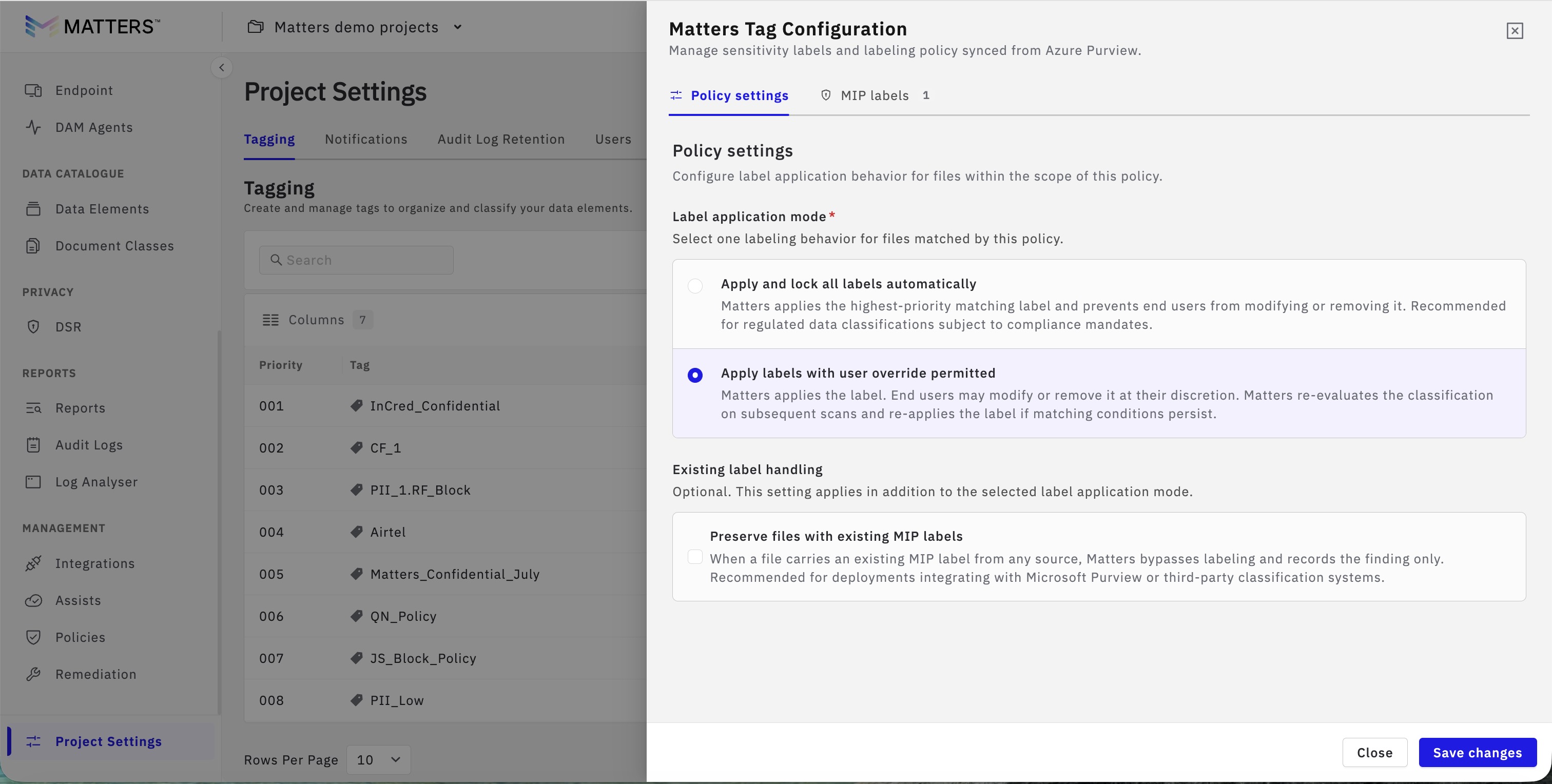
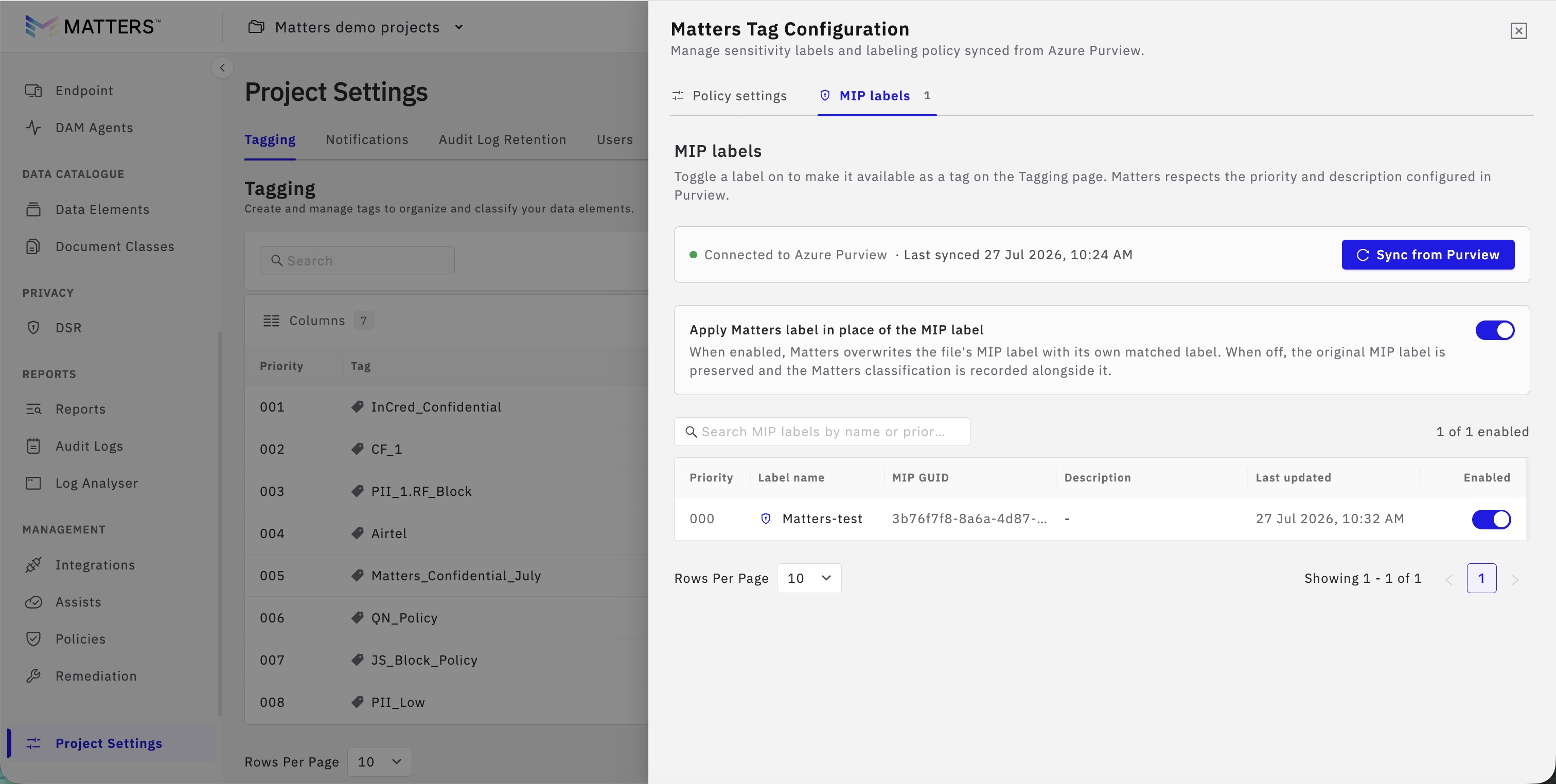
1. MIP Label Support for Endpoints
Microsoft Information Protection (MIP) label support is now available for endpoint data.
Key capabilities include:
Read and respect existing MIP labels applied to files on Windows endpoints during classification scans.
Surface MIP label metadata alongside sensitive data findings in the Endpoint inventory and File Details view.
Policy enforcement based on MIP labels, enabling DDR and governance policies to reference label context in addition to classification results.
This allows organizations using Microsoft Purview or other MIP-compatible tools to bring their existing labeling investments into the Matters platform, ensuring consistent governance across endpoint and cloud environments.
2. DAM Support for Oracle Self-Hosted Databases
Database Activity Monitoring now supports Oracle databases deployed in self-hosted and on-premises environments.
This integration brings:
Full query and activity log collection from Oracle DB instances via native audit log mechanisms.
Out-of-the-box detection policies covering privilege escalation, bulk data access, and suspicious query patterns specific to Oracle environments.
Consistent alert and investigation experience across Oracle alongside existing PostgreSQL, MySQL, Redshift, and RDS integrations.
Teams running Oracle in private data centers or hybrid environments can now bring these databases under the same DAM coverage as cloud-hosted databases.
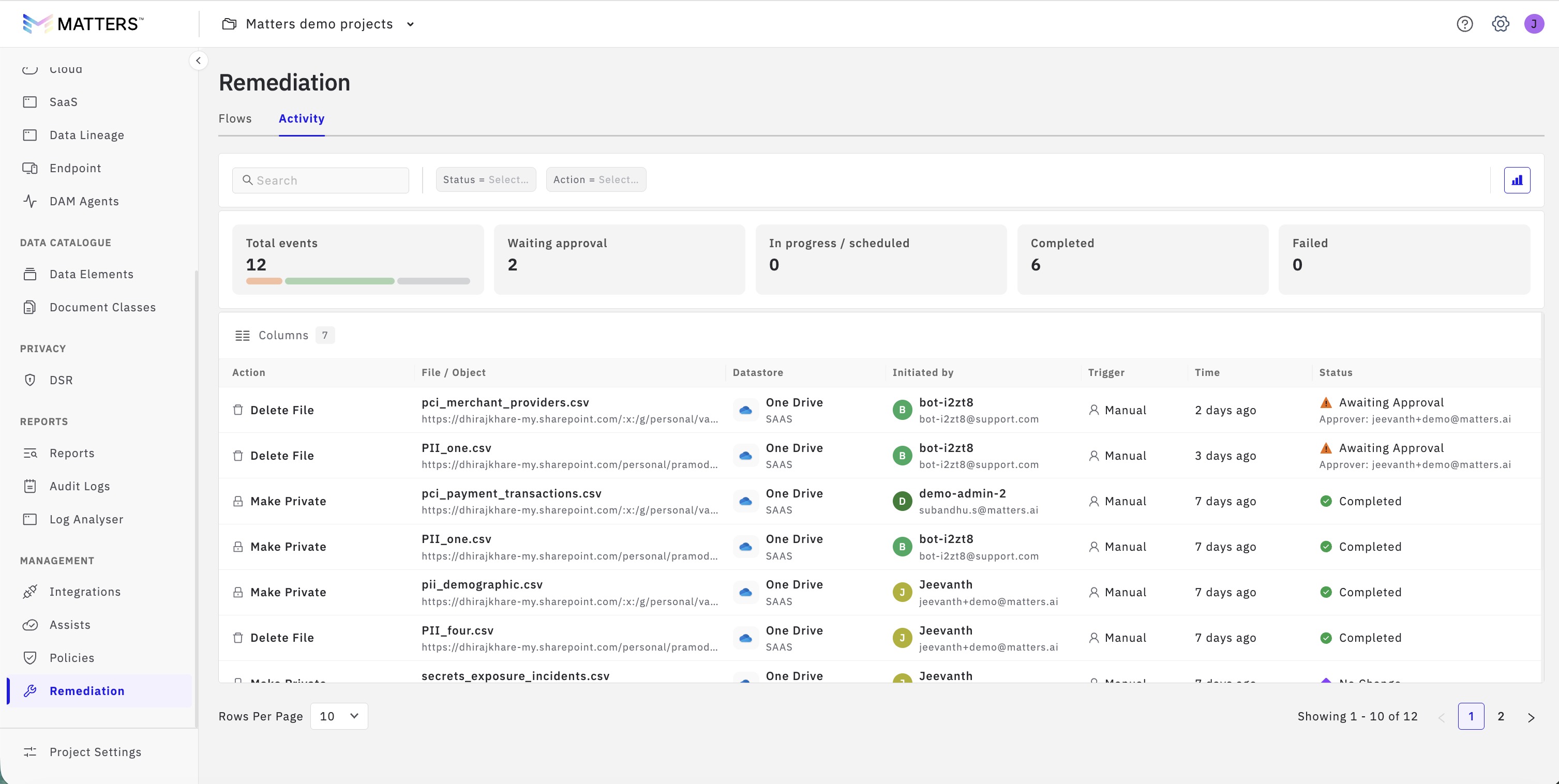
3. File-Level Remediation for SaaS
Remediation for SaaS is now available at the individual file level, enabling security teams to take targeted action directly on exposed files in Google Drive, OneDrive, and SharePoint without leaving the Matters console.
Key capabilities include:
Per-file remediation actions such as removing public links, revoking external user access, and transferring file ownership, applied directly to the specific file surfaced in a finding.
Inline remediation from exposure views — teams can act on a file without navigating to the source SaaS application, reducing the steps between detection and resolution.
Remediation audit trail capturing the action taken, the file affected, the actor, and the resolution timestamp for each remediated finding.
This brings SaaS remediation to the same level of granularity already available for cloud infrastructure findings, allowing teams to resolve exposure at the source rather than applying broad policy changes.
4. Matters AI Co-pilot & MCP
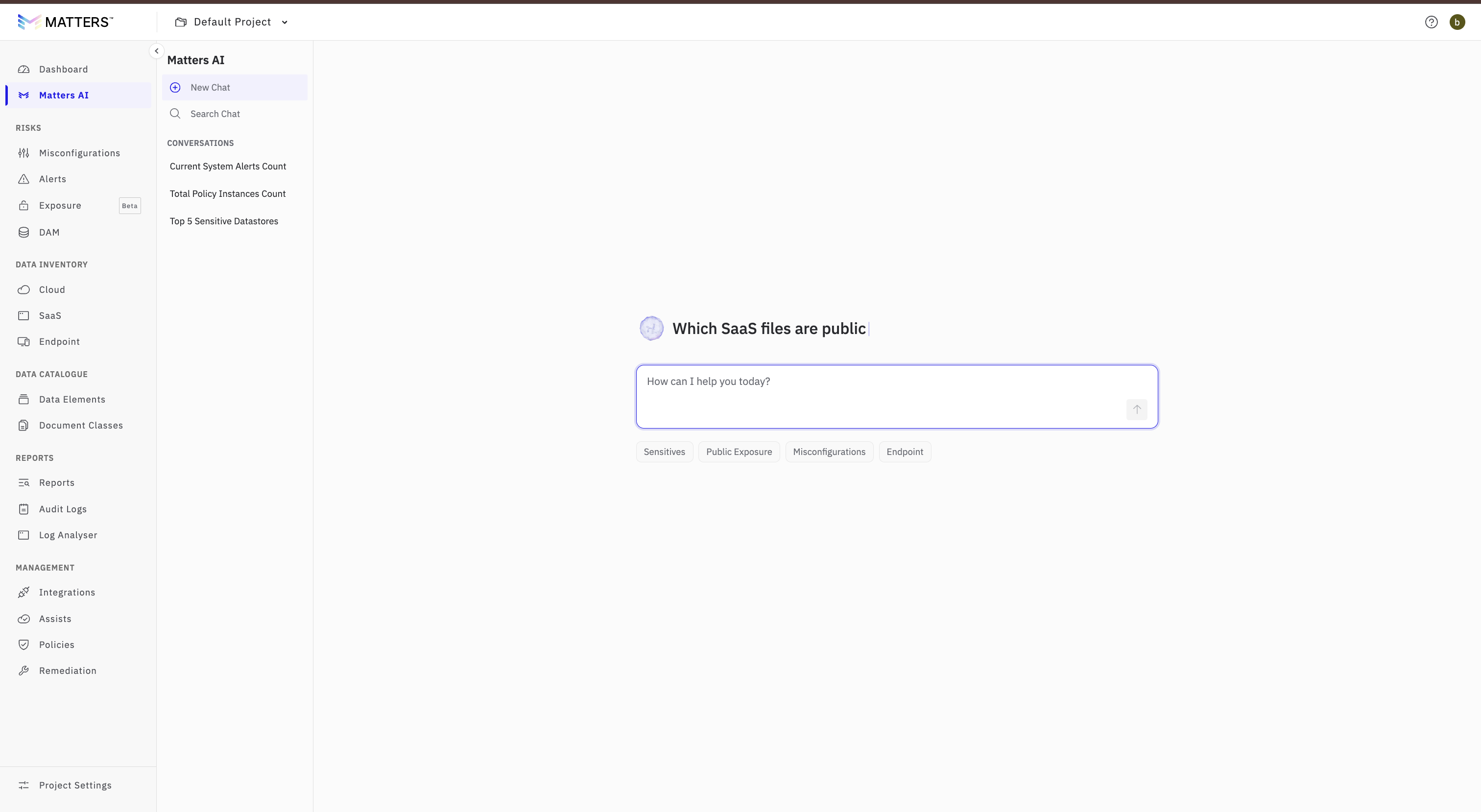
The Matters AI Co-pilot is now available, bringing conversational intelligence to data security posture management directly within the Matters console.
Key capabilities include:
Posture insights on demand — ask the Co-pilot natural language questions about your data security posture and receive contextual answers grounded in your environment's findings.
Gap prioritization guidance — surface the most impactful gaps to address, with the Co-pilot ranking issues based on severity, exposure scope, and sensitive data at risk. Example: "Tell me the top 5 gaps I should work on today."
Fix recommendations — receive suggested next steps and remediation paths for prioritized issues, helping teams move from question to action without leaving the console.
The Co-pilot is designed to make platform insights accessible to every stakeholder, reducing the time between identifying a risk and taking action on it.
5. Expanded File Type Coverage
Discovery and classification coverage has been expanded to include additional file formats commonly found across endpoint and SaaS environments.
Newly supported file types include:
HTML — web page content and exported reports.
EML — individual email messages exported from mail clients.
PST — Outlook mailbox archives, enabling classification of historical email data at scale.
HEIC — high-efficiency image files native to modern Apple devices.
This expansion ensures that sensitive data stored in email archives, web content, and modern image formats is brought into the same classification and governance workflows as other supported file types.
6. CockroachDB DSPM Support
DSPM now supports CockroachDB as a scannable data source, enabling discovery and classification of sensitive data across CockroachDB clusters.
This integration brings:
Native scanning of CockroachDB databases, schemas, tables, and columns.
Consistent classification coverage using the same data element detection available across other supported databases.
Visibility into distributed clusters to identify where sensitive data lives across CockroachDB nodes.
Teams running CockroachDB for distributed SQL workloads can now bring these clusters under the same DSPM visibility as their other cloud and on-prem databases.
7. Exposures UI Revamp
The Exposures page has been redesigned to provide a more actionable, analytics-driven view of data exposure risk across the environment.
Key updates include:
Top Exposure Category cards highlighting the leading categories at a glance — Sensitive Findings, Excessive Exposure, Stale Data, Risky User, Public Exposure, and Data Residency — each with datastore counts and quick drill-down links.
Analyst Verdict distribution showing exposures broken down by severity (Critical, High, Medium, Low) across Open, Resolved, and False Positive states, giving teams a clear view of remediation progress.
Exposure Trend chart tracking open versus closed exposures over configurable time ranges, making it easy to see whether the environment's exposure posture is improving or degrading.
Affected Datastores summary with 7-day change indicators, so teams can immediately see whether exposure surface is expanding or shrinking.
Refined filtering and views — quick tabs for All Exposures, Assigned to me, Open, Resolved, and False Positive, alongside category and datastore type filters for faster investigation.
The revamp brings the Exposures page closer to a true operational workspace, helping teams prioritize and act on the exposures that matter most.
8. SAML Integration
SAML-based Single Sign-On (SSO) is now supported for logging into the Matters console.
Key capabilities include:
IdP-agnostic SAML support — onboard any SAML-compliant identity provider, including Okta, Azure AD, Google Workspace, and others.
Centralized access control — manage Matters console access through the same identity provider used for the rest of the organization's enterprise applications.
Improved security posture — enforce organizational authentication policies such as MFA, conditional access, and session controls consistently across Matters and other enterprise tools.
This gives security and IT teams a familiar, standards-based path to onboard Matters into their existing identity infrastructure.
Questions or feedback
Reach the Matters.AI Customer Success team at cs-ops@matters.ai, or visit docs.matters.ai for setup guides and API references.